

Beyond the sidelines: MSU Health Care athletic trainers in local schools
October 19, 2026 - Amy Soper
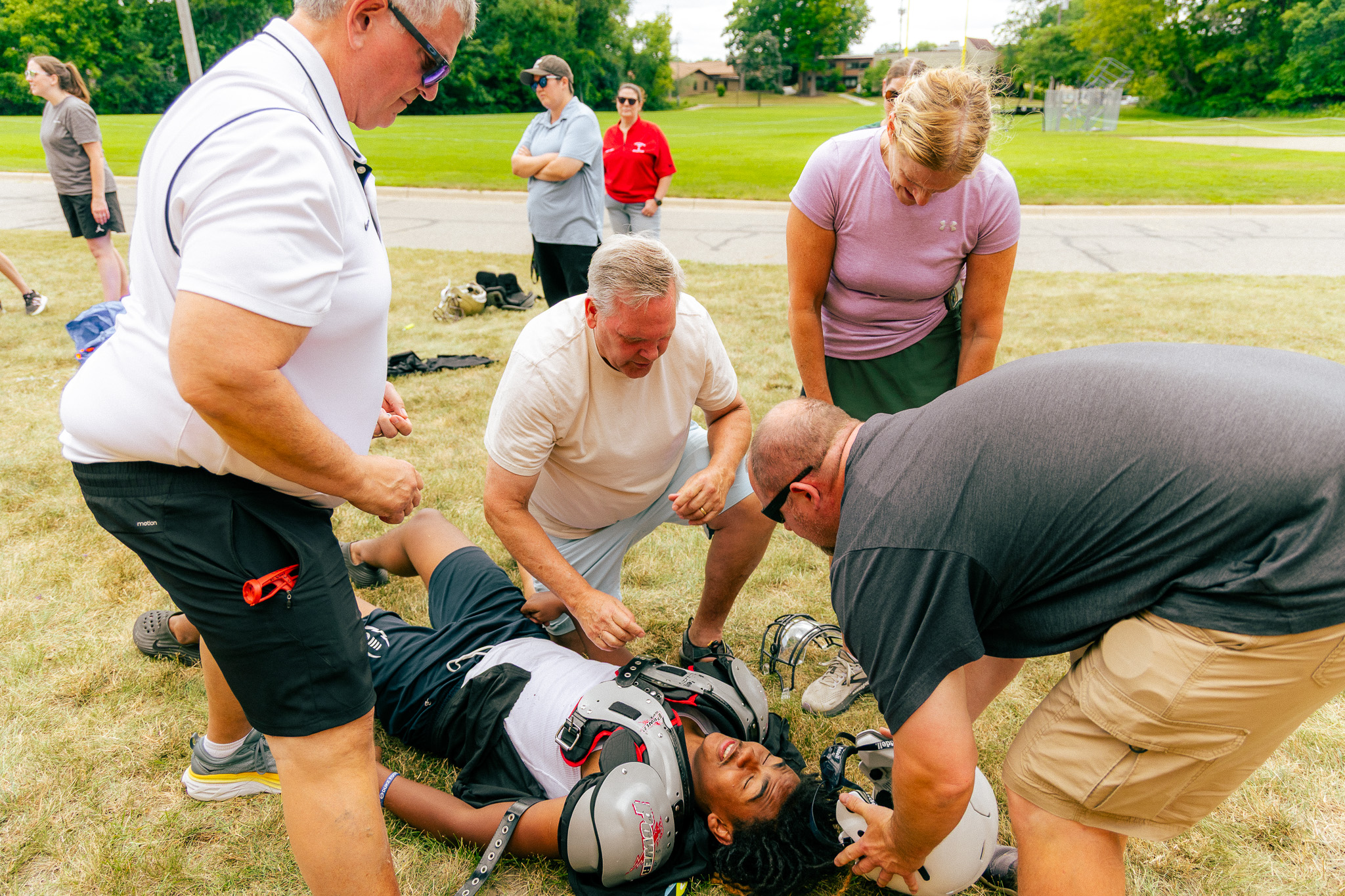
When a high school athlete is injured during a game, most people see only the moments that follow with the athlete down on the field and concerned coaches and worried parents watching from the stands. What many do not see is the athletic trainer already moving into action.
MSU Health Care Sports Medicine athletic trainers serve as the first line of medical support for student-athletes, providing injury prevention, emergency response, rehabilitation and guidance that helps them stay healthy and safely participate in the sports they love.
A growing presence in local schools
The MSU Health Care Sports Medicine outreach athletic training program has expanded significantly since it was implemented three years ago.
According to Martha Munsell, an MSU Health Care Sports Medicine athletic trainer at Fowlerville High School, the program began with athletic trainers contracted to serve Fowlerville, Haslett and Holt high schools. Since then, the program has grown to include East Lansing, Okemos and Grand Ledge.
MSU Health Care athletic trainers currently provide daily coverage at six area schools, attending practices and games while serving as trusted health care professionals for student-athletes, parents and coaches. Some schools also have contracts with MSU Health Care physicians to provide care at a specific game or athletic event, however athletic trainers provide care on a daily basis in the school and at practices.
“Having athletic trainers on site at high schools for practices and games gives parents a level of comfort knowing that there’s someone right there on the sideline who can help their child,” Munsell said. “And it gives student-athletes a sense of comfort that there’s someone to help who is focused solely on their health and safety and is not worried about whether they win or lose the game.”
Building safer sports programs
Many people associate athletic trainers primarily with taping ankles or responding to injuries during games.
In reality, athletic trainers are licensed health care professionals who provide a wide range of services, including:
- Injury evaluation and treatment
- Emergency response for sports injuries
- Rehabilitation oversight
- Return-to-play decision making
- Injury prevention education
- Communication with physicians and families
They also help identify injury trends and modify training programs before problems become widespread.
For example, athletic trainers may notice an increase in shoulder injuries among a particular team or recurring lower back issues among athletes. By sharing that information with coaches, they can recommend changes to conditioning programs, stretching routines or sport-specific warmups.
Preventing injuries before they happen
Some of the most important work athletic trainers do happens long before an injury occurs.
Munsell said athletic trainers frequently work with coaches to develop preventive exercise programs tailored to each sport. Those programs may include jumping and landing drills, strength training exercises and warmups designed to reduce the risk of serious injuries such as ACL tears.
Athletic trainers also continuously evaluate injury patterns across teams and seasons, adjusting recommendations as circumstances change.
"What works one year doesn't necessarily work the next year," Munsell noted.
That proactive approach is one reason certified athletic trainers have become an essential part of high school sports programs, said Haley Diringer, Holt High School athletic director.
“From an administrative perspective, they are a critical part of our school’s commitment to student safety, risk management and providing the highest quality athletic experience possible,” Diringer said. “An athletic trainer is not a luxury in high school athletics; they are an essential member of the team dedicate to putting student-athletes well-being first.”
When every second matters
Athletic trainers are also prepared to manage medical emergencies.
Through MSU Health Care's sports safety training initiatives, athletic trainers help schools prepare for situations ranging from cardiac emergencies and heat illness to severe bleeding, spinal injuries and breathing emergencies.
The annual training helps schools meet emergency action planning requirements while strengthening collaboration among coaches, athletic directors and medical professionals.
Connecting student-athletes to specialized care
One of the program's greatest strengths is its connection to the broader MSU Health Care Sports Medicine team.
Many injuries can be managed directly by school-based athletic trainers. When an athlete requires imaging, orthopedic evaluation, surgery or specialized treatment, athletic trainers can help coordinate care with sports medicine physicians and specialists.
Munsell describes the relationship as a team approach.
Athletic trainers handle many day-to-day injuries and concerns, while physicians provide additional evaluation and treatment when cases become more complex.
Whether an athlete has a dislocated finger, a significant laceration or an ACL injury that requires surgery, students and families have access to a network of sports medicine experts.
Supporting athletes beyond injury
For athletic trainer Heidi Lucke, who serves Haslett High School, the most meaningful moments come long after the initial injury.
"Being a high school athletic trainer is rewarding and busy," Lucke said. "You help athletes prevent and recover from injuries, attend practices and games, and make sure they stay healthy and safe."
Lucke says she prefers to work behind the scenes, serving as a source of support and encouragement for athletes throughout their recovery journeys.
"It's not about me. It's about them," she said. "I'm there to support their journey and help them become the best version of themselves, both in sports and in life."
For student-athletes, athletic trainers are often more than medical professionals. They become trusted resources, mentors and advocates.
"What keeps me passionate about this profession is the genuine 'thank you' from an athlete after helping them through their journey," Lucke said. "Knowing I was able to support them and be part of their recovery is incredibly rewarding."